
G20 Miami 2026 Transportation: Planning Diplomatic and Executive Movements in Doral

The 2026 G20 Leaders’ Summit is scheduled for December 14–15 at Trump National Doral in Miami-Dade County. For delegations, diplomatic staff, executive teams and organizations with legitimate summit-related business, ground transportation should be treated as a controlled logistics function, not a conventional event transfer. The operating environment can change as official security, credentialing and traffic plans are finalized.
That makes a useful transportation guide necessarily conservative. The plan should be built around verified access instructions, exact passenger authority, controlled communications and contingency capacity. It should never assume access to restricted areas, motorcade privileges, security exemptions or routes that have not been formally communicated.
VIP Miami Transfers is not affiliated with the G20, the U.S. Government, Trump National Doral Miami or the City of Doral. This article addresses ordinary private ground transportation planning for authorized passengers and support teams outside official government transport arrangements.
Table of Contents

What is verified for the 2026 G20 Leaders’ Summit in Miami
The U.S. Department of the Treasury states that the United States’ 2026 G20 host year will culminate with the Leaders’ Summit on December 14–15 at Trump National Doral in Miami. See the Treasury announcement. The Office of the United States Trade Representative separately confirms the same dates and location in its G20 Trade Ministerial announcement.
The City of Doral’s G20 information page also lists December 14–15 and identifies Doral as the host community. It notes that additional local event details are still to be announced. That uncertainty is important: transportation planning should distinguish what is confirmed from what remains provisional.
Separate official delegation transport from private support movements
Do not assume a private chauffeur can enter, stage in, or cross a controlled summit area. Official delegations may receive government-arranged transportation, security details, motorcade procedures or access instructions that are entirely separate from private car service. A private provider should operate only within the access parameters communicated to the passenger or authorized coordinator.
The practical private-transportation use case is often outside the protected core: airport and hotel movements for support staff, executives or guests; transfers to authorized meetings; movements between hotels and private offices; vehicle coverage before or after official transport takes over; and contingency capacity for passengers who are not part of a government motorcade.
Our existing guide to private transportation for diplomatic staff in Miami covers the broader discretion and coordination principles without assuming diplomatic privilege or official access.
Build every movement from a verified handoff point
A summit itinerary can fail when a broad destination is mistaken for an operational instruction. “Doral,” “the summit,” or even the name of a resort is not enough. Each private movement should have a verified pickup point, verified drop-off point, passenger-ready contact and a fallback location if access conditions change.
The handoff point is more important than the theoretical shortest route. When security perimeters or traffic controls are in effect, the correct pickup location may be farther from the passenger’s ultimate destination than on a normal day. The transportation team should follow official access direction rather than improvise toward a restricted area.
Use one command structure for itinerary changes
High-level movements often involve principals, assistants, security personnel, protocol teams, family offices, corporate staff and chauffeurs. The risk is not a lack of communication; it is too many independent instructions. The transportation brief should identify one authorized operational contact, one current itinerary and one escalation path.
A chauffeur should not have to decide which of three conflicting messages controls the movement. If an official security instruction changes access, that instruction governs. If a client-controlled meeting changes, the designated coordinator should update the transportation plan and confirm the new handoff.
For teams arriving on different flights or moving on parallel schedules, our multi-vehicle executive transportation guide explains how to assign vehicles and decision authority without forcing every passenger into one itinerary.
Airport arrivals should be planned as release events
Miami International Airport is close to Doral geographically, but airport release time is still variable. International arrivals can involve immigration, baggage and customs; domestic passengers may be ready quickly; private aviation can create a different handoff sequence. Do not schedule the first fixed post-arrival commitment from landing time alone.
Use a realistic passenger-release assumption and keep live flight tracking separate from the itinerary clock. For groups arriving across multiple airports or flights, see our multiple executive airport arrivals guide.
For commercial arrivals at MIA where a structured passenger handoff is useful, our Miami airport meet-and-greet transportation guide explains the arrival-side coordination problem in more detail.
Expect traffic controls to outrank normal routing assumptions
Summit-related traffic management can affect roads well beyond a venue entrance. Final road-closure, staging and security instructions may be issued closer to the event, and those instructions can change the practical route or pickup location. A plan created weeks earlier should therefore be treated as a framework, not a promise that a normal route will remain available.
Do not publish or circulate speculative road-closure maps as if they were official. Use current government, law-enforcement and local-authority instructions when available, then update chauffeurs and passengers from the same source of truth. The correct day-of decision may be a longer route, an earlier pickup or a remote handoff.
Separate principal vehicles from support-team capacity
A senior principal may require dedicated coverage while staff, guests or support personnel have different schedules. Combining everyone into one vehicle can look efficient until one passenger is delayed by a meeting or access check. For summit-period planning, the vehicle plan should reflect who must remain independent and who can reasonably share movements.
This does not mean every passenger needs a dedicated vehicle. It means the transportation structure should mirror the itinerary structure. If two groups can separate without consequence, separate capacity can protect both. If their schedules are genuinely synchronized, shared service may be entirely appropriate.

Protect confidentiality without creating false security claims
Discretion matters, but private transportation should not be marketed as a substitute for protective security. Passenger names, hotel details, mobile numbers and meeting locations should be shared only with the people who need them operationally. At the same time, providers should avoid claiming government-level security, diplomatic protection or access authority they do not possess.
Good operational privacy is mostly disciplined information handling. The working itinerary should contain enough information to execute the movement but should not become an uncontrolled distribution list of every principal’s schedule.
The G20 private transportation movement brief
For each private movement, record the authorized passenger, mobile contact, pickup point, drop-off point, access instructions supplied by the client or authority, fixed deadline, expected release window, vehicle assignment, luggage requirements and fallback handoff. Add the name of the person who can authorize a change.
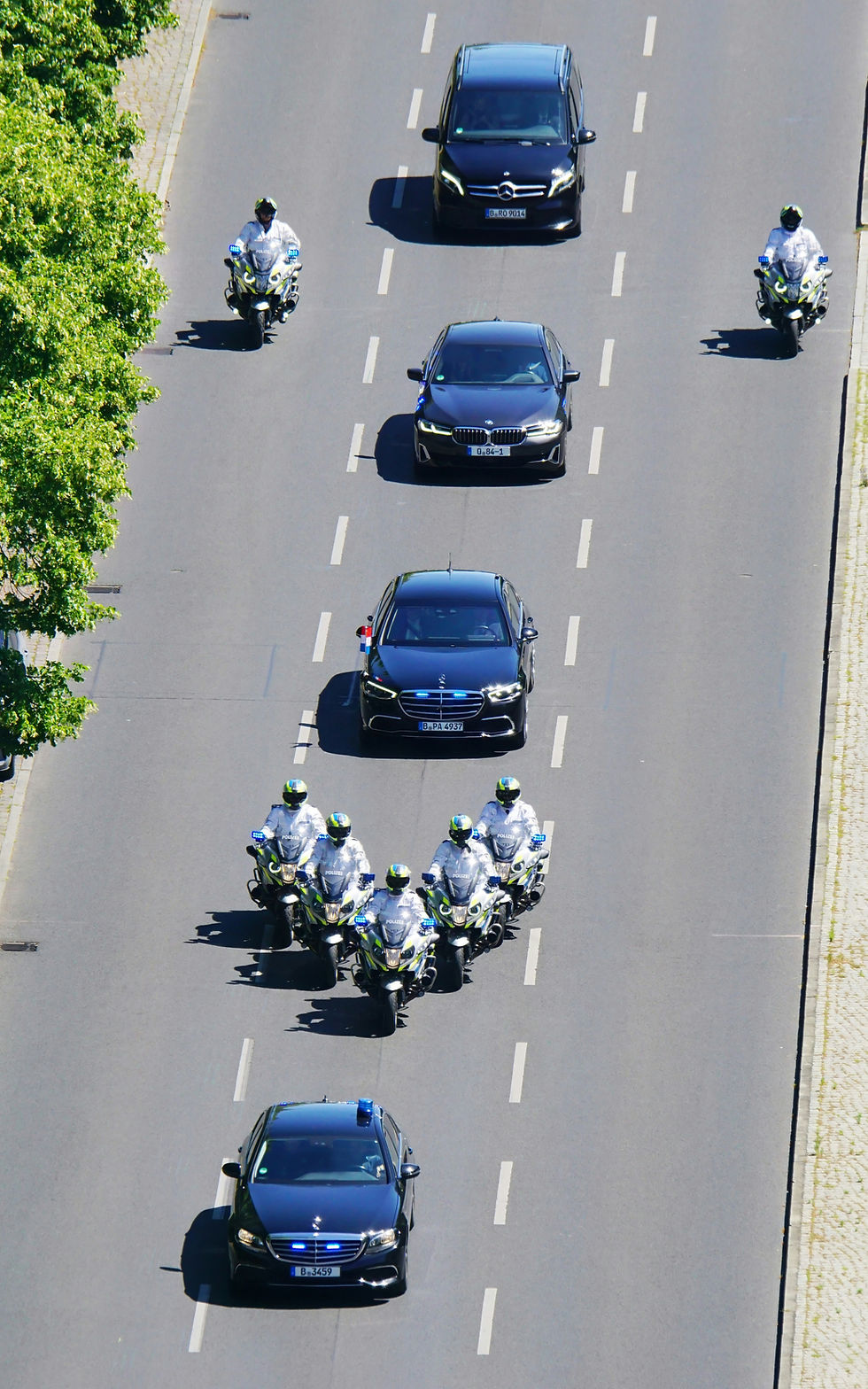
For a multi-vehicle program, include a vehicle roster and passenger hierarchy. If one vehicle must remain with a principal while another can be released, state that before the day begins. If an official motorcade or government transport assumes responsibility for a passenger, identify where the private service ends and where it resumes.
The cleanest plan makes every handoff explicit. That reduces unnecessary calls and prevents a chauffeur from improvising in an environment where improvisation may conflict with access controls.
Frequently Asked Questions
When and where is the 2026 G20 Leaders’ Summit?
Current U.S. government and City of Doral information lists the Leaders’ Summit for December 14–15, 2026 at Trump National Doral in Doral, Florida.
Can a private transportation company provide official G20 delegation transport?
Official delegation transportation and security arrangements are controlled by the relevant government and summit authorities. A private provider can support authorized client-controlled movements only within the access rules communicated to the passenger or coordinator and should never imply official status or unrestricted access.
Should pickup times be fixed weeks in advance?
The itinerary can be planned early, but final pickup times and handoff points should remain subject to verified summit-period traffic, security and access instructions. Hard deadlines such as flights or confirmed meetings should drive the buffer.
What information should a delegation support team provide?
Provide authorized passenger names, mobile contacts, verified pickup and drop-off points, access instructions, flight details, luggage needs, fixed deadlines, vehicle hierarchy and one person who can approve changes. Do not send sensitive itinerary information more broadly than required for operations.
Planning G20-period private movements with VIP Miami Transfers
For summit-period transportation, certainty comes from disciplined handoffs, verified instructions and clear decision authority—not from pretending normal event rules apply. VIP Miami Transfers can support authorized airport, hotel, office and client-controlled movements in Miami and South Florida while respecting official access and security direction. For complex business schedules, see our Executive Transportation service.
Published by VIP Miami Transfers. Event and access details are based on official sources available at the time of review; time-sensitive information should be rechecked before travel.



Comments